Institute projects

lake

Impact

Environmental and social contributions supported through program domains and applied work

Water treated
[m3]
0
Public workshops
[people]
0
Open methods
[white papers]
0
Open Science
[articles]
0

Impact areas

Environmental impact
SDG6
SDG13
SDG14
SDG15
  • SDG 6 - Clean Water and Sanitation: innovative water-quality technologies, watershed and basin analysis, water-cycle stewardship, and evidence systems for safe water, restoration, and integrated water management.
  • SDG 13 - Climate Action: development of water-risk and resilience frameworks, climate-related methodologies and MRV logic, and training that turns climate evidence into practical planning and finance-ready structures.
  • SDG 14 - Life Below Water: Blue Economy work on oil-spill response, aquatic pollution control, marine and coastal restoration, and evidence systems linking water quality to ecosystem recovery.
  • SDG 15 - Life on Land: water-cycle stewardship, inland freshwater and land-water system analysis, biodiversity-aware decision tools, and finance-relevant evidence for ecosystem protection and restoration.
Social impact

SDG4
SDG9
SDG11
SDG12
SDG16
SDG17
  • SDG 4 - Quality Education: micro-learning, workshops, technical training, field-based learning, and public materials that translate complex environmental knowledge into applied education.
  • SDG 9 - Industry, Innovation and Infrastructure: evaluation of technologies against environmental trade-offs, strengthening research and innovation capacity, and building governance and evidence frameworks for responsible deployment.
  • SDG 11 - Sustainable Cities and Communities: support for urban and infrastructure decisions with integrated environmental evidence on water, waste, chemicals, resilience, and circular-construction-related impacts.
  • SDG 12 - Responsible Consumption and Production: LCA-based trade-off prevention, safer approaches to chemicals and waste, decision-governance for environmental reporting and claims, and stronger evidence for procurement and public understanding.
  • SDG 16 - Peace, Justice and Strong Institutions: creating space for integrity, traceability, and responsibility at the center of environmental decision-making, while supporting transparent governance, participatory dialogue, and public access to structured environmental information.
  • SDG 17 - Partnerships for the Goals: interdisciplinary collaboration, knowledge exchange, partnership-ready frameworks, environmental databases, and new metrics that strengthen multi-stakeholder cooperation and biosphere-relevant measurement.

Beyond the SDGs

  • Interdisciplinary analysis across water, energy, and climate
  • Decision governance for evidence and claims
  • EU Taxonomy criteria and screening logic
  • Carbon-credit methodologies and MRV protocols
  • Blue and green finance evidence frameworks
  • Environmental databases and data integrity systems
  • LCA-based assessment to prevent trade-offs
  • Innovation assessment for deployment and finance readiness

Flagship projects

Life Cycle Decision project cover
Decision Governance

Life Cycle Decision (LCD)

Making LCA results understandable, comparable, and safe to communicate

Problem

LCA-related results are often too technical to use safely outside expert circles. LCD helps understand what results mean, what drives them, and how comparison or claims can become reliable.

LCA interpretationTrade-OffsClaim safetyProduct passportsGreen claimsInvestment evidence
EutroLakes project cover
Monitoring & MRV

EutroLakes

Methane (CH₄) reduction by eutrophic water remediation

Problem

Blooming (eutrophic) waters can become major methane sources, but they are still largely missing from climate monitoring and finance systems. Without proper MRV, eutrophic water remediation cannot be valued or funded as a credible climate action.

EutrophicationBiodivesityMRVCarbon creditsClimate financeNature-based solutionClimate mitigation
CoherenSea
Blue Economy

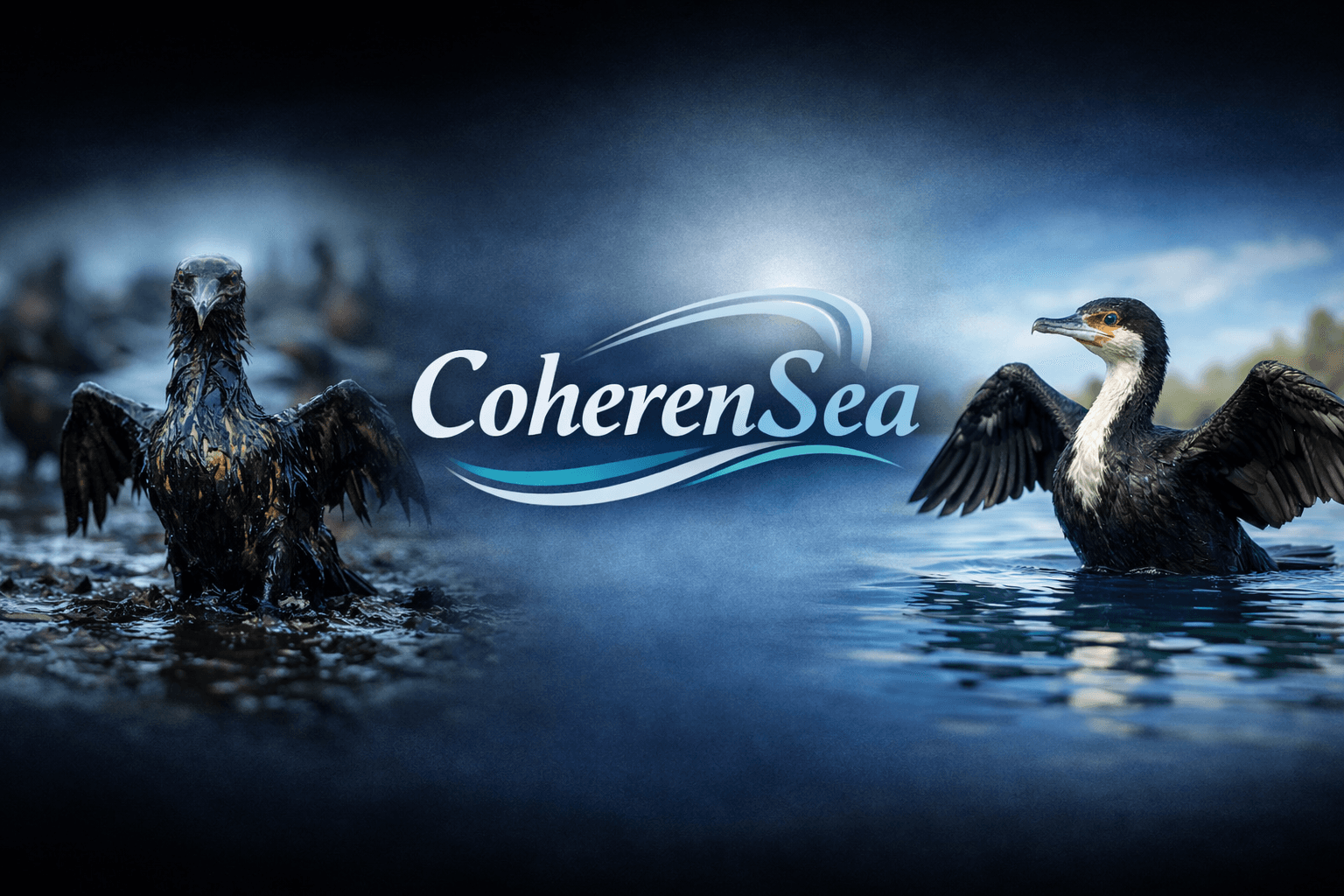
CoherenSea

Petroleum-free water, sand, and marine life

Problem

Oil spills and petroleum pollution can severely damage coasts, marine life, and wildlife. Many cleanup methods are too slow, too toxic, or do not work well in cold water, salty conditions, or on beaches, rocks, and animals.

Oil spill responseMarine remediationWildlife-safe cleanupShoreline restorationNon-toxic dispersantCrude oilDieselJet fuel
DrinkAble project cover
Water Systems

DrinkAble

Chlorine-free safe drinking water

Problem

Unsafe water still spreads disease, and many disinfection systems rely on chlorine and other chemicals that can leave harmful by-products. WHO states that at least 1.7 billion people use a drinking-water source contaminated with faeces, and microbiologically contaminated drinking water can transmit diseases such as diarrhoea, cholera, dysentery, typhoid, and polio. A safer, chemical-free way to disinfect water is needed, especially for aged pipe systems, or decentralized use.

Drinking waterChlorine-freeUltrasoundPathogen controlE. coliParasitesWater reuseBiodiversity