ENVIRONMENTAL TECHNOLOGIES · PILOTS
BlueTech & Innovation
Exploring environmental technologies for oil-spill response, innovative water treatment and practical demonstration. CoherenSea and DrinkAble bring scientific assessment, pilot design and technology evaluation into real-world water challenges
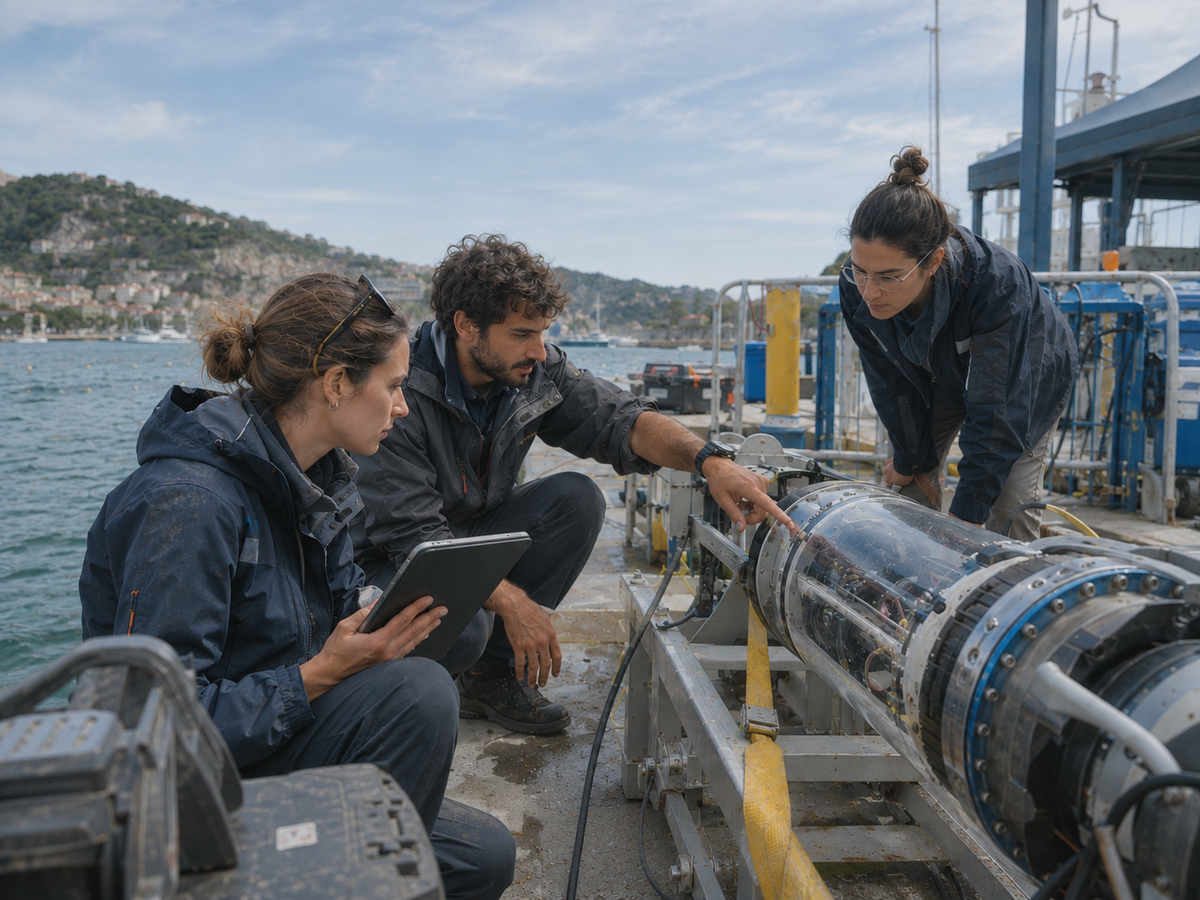
We connect scientific questions with field learning and collaboration. CoherenSea and DrinkAble show how water-focused ideas can be explored with partners.
The challenge
Water pollution and treatment problems need careful evaluation in the conditions where solutions may eventually be used. EcoResonance connects scientific assessment, technology questions and responsible pilot design without assuming that every technology belongs to the institute.CoherenSea
Petroleum-free water, sand, and marine life
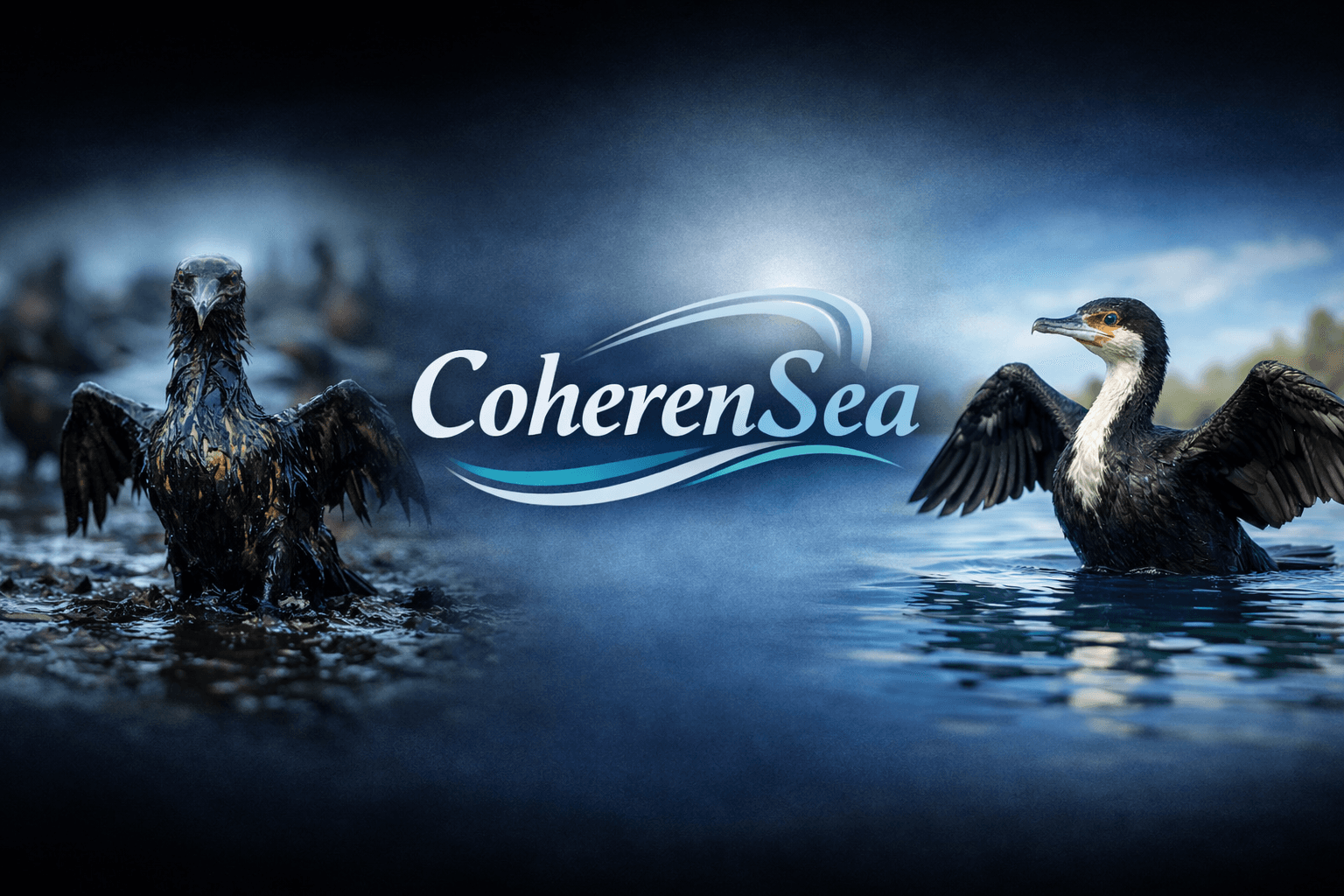
Oil spills and petroleum pollution can severely damage coasts, marine life, and wildlife. Many cleanup methods are too slow, too toxic, or do not work well in cold water, salty conditions, or on beaches, rocks, and animals. (internal project)
- Marine oil spill response (open water, coastal zones)
- Shoreline and beach remediation (sand, rocks, sediments)
- Wildlife decontamination (birds, marine mammals)
- Contaminated soils and landfill leachates
- Industrial and wastewater hydrocarbon treatment
- Emergency response systems and oil spill contingency planning (OSCP)
- Hybrid physicochemical–biological remediation
- Non-ionic surfactant emulsification
- Yeast-derived biocatalysis
- Indigenous microbial stimulation
- Accelerated hydrocarbon oxidation and biodegradation
- Rapid hydrocarbon breakdown
- Biodegradable cleanup solution
- On-site remediation capability
- Wildlife-safe cleaning
- Odor elimination
- Water quality recovery
- Reduced disposal volumes
- Emergency response acceleration
- Safer emergency response for workers and communities (no PPE required in application)
- Reduced health risks from toxic hydrocarbons and vapors
- Lower operational and cleanup costs for governments and operators
- Improved disaster response capacity and infrastructure readiness
- Protection of livelihoods dependent on coastal and marine ecosystems
- Accelerated degradation of petroleum hydrocarbons
- Reduced toxicity for flora and fauna
- Recovery of marine biodiversity (safe for animals and ecosystems)
- Prevention of secondary pollution from toxic dispersants
Blue Economy
Projects in development
Water sustains life across natural ecosystems, from seas and coasts to lakes and rivers. The Institute helps develop remediation projects by testing innovative methods and moving them toward technical readiness (TRL) for practical deployment.
- River TreatmentMicrobiological risk reduction for public health and river ecosystem protection
- Lakes & Ponds TreatmentAlgal bloom mitigation for human safety, biodiversity, and ecological recovery
DrinkAble
Chlorine-free safe drinking water
Unsafe water still spreads disease, and many disinfection systems rely on chlorine and other chemicals that can leave harmful by-products. WHO states that at least 1.7 billion people use a drinking-water source contaminated with faeces, and microbiologically contaminated drinking water can transmit diseases such as diarrhoea, cholera, dysentery, typhoid, and polio. A safer, chemical-free way to disinfect water is needed, especially for aged pipe systems, or decentralized use.

- Drinking water treatment
- Decentralized and rural water systems
- Hospitals and emergency water supply
- Industrial and food-sector wastewater hotspots
- Water reuse
- Broad-spectrum ultrasonic harmonics
- Frequency sweeping
- Acoustic cavitation
- Advanced oxidation processes
- Hydroxyl radical generation
- Chemical-free disinfection
- Residue-free treatment
- Pilot-scale validation
- Low-consumable operation
- Scalable water treatment
- Supports safer drinking water without chlorine handling
- Improves feasibility for remote and decentralized use
- Reduces operator dependence on chemical supply chains
- Can strengthen public-health protection in high-risk water settings
- Avoids chlorine-based disinfection residues and related by-products
- Reduces chemical transport and storage needs
- Enables lower-chemical treatment pathways for water reuse and discharge
- Supports more resource-efficient water treatment systems
From Ecosystems to Products
Projects in development
We work with researchers, educational institutions, governments, non-profit organisations, and responsible businesses seeking to strengthen environmental stewardship through science-based approaches.
- AquacultureImproved nutrient availability and transport through conditioned water, supporting lower fertilizer demand.
- AgricultureImproved soil softness, moisture regulation, and gas exchange through conditioned water with lower surface tension.
- EnergyNon-chemical water conditioning providing anti-corrosion and anti-scaling properties for cooling systems
- Products of marine ecosystemsSupporting responsible products and value chains that depend on healthy marine and coastal ecosystems.
Partner With Us
What could we make possible together?
Connect with us to explore a pilot, scientific collaboration or support for blue innovation.