LCD case study
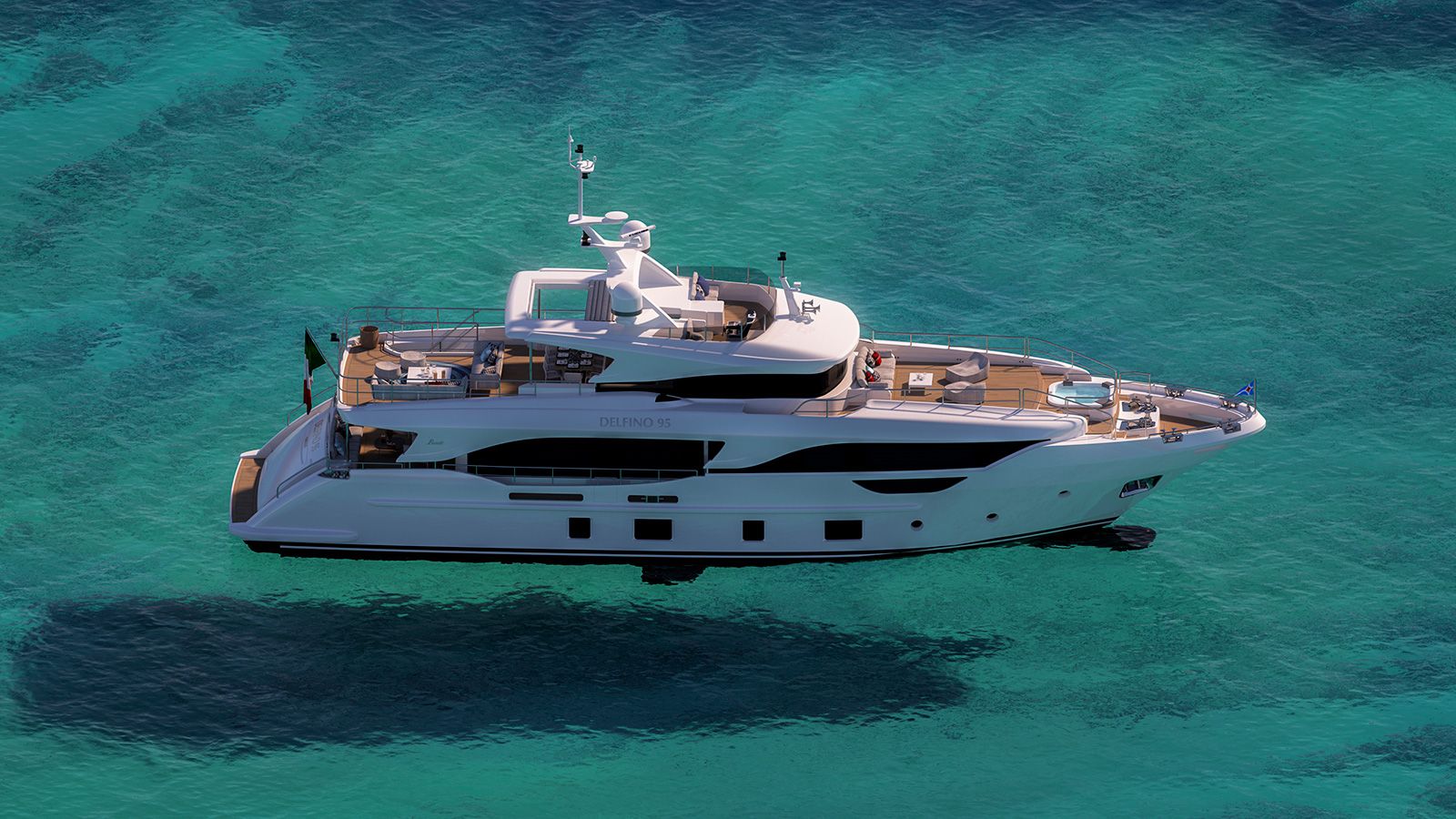
Benetti Delfino 95
The carbon benefit is lost if the yacht is not used intensively enough.
- Scientific result
- 16% lifecycle carbon benefit from the lighter carbon-fiber Benetti Delfino 95
- LCD Intelligence
- The 16% benefit is not immediate and is only achieved after roughly 25 years of actively operating the yacht
- Green Claim RISKhigh
- Requires conditional wording to comply with EU EmpCo
- LCD Opportunity Claim
- A ~45% lighter carbon-fibre superstructure reduces fuel-related emissions during yacht operation, creating the potential for lower lifecycle carbon impact as operating hours accumulate.
Original peer-reviewed LCA report
Francesco Del Pero, Caterina Antonia Dattilo, Alessandro Giraldi and Massimo Delogu, “LCA approach for environmental impact assessment within the maritime industry: Re-design case study of yacht’s superstructure,”Proceedings of the Institution of Mechanical Engineers, Part M: Journal of Engineering for the Maritime Environment, 238(1), 153–170)
Original results
- The study found that replacing the glass-fibre/vinyl-ester superstructure with a ~45% lighter carbon-fibre/epoxy structure could reduce lifecycle GWP by ~16.4%
- Reference operating model: 25,000 operating hours, 80 L/h fuel consumption, over a 25-year functional basis.
- The carbon-fibre solution has higher production-stage GWP, but its lower weight reduces fuel-related emissions during operation.
LCD Green Claim Intelligence outcomes
The environmental return on lightweighting depends on how intensively the yacht is used.
- The “16% lower carbon footprint” is conditional, not immediate.
At the study's reference 80 L/h operating profile, carbon-fibre only becomes the lower-GWP option starting from year 13 and continuous use up to 25 years (12,670 operating hours).
Recommended conditional claim
- “A ~45% lighter carbon-fibre superstructure reduces fuel-related emissions during yacht operation, creating the potential for lower lifecycle carbon impact as operating hours accumulate.”
OUTCOME
The real value identified by LCD is not simply “carbon fibre = 16% greener.” It is that lightweighting creates an operational efficiency benefit whose environmental return depends on the yacht's actual duty cycle. This gives the manufacturer both a credible green claim and a measurable operating condition against which that claim can later be validated.